Gu Sui Bu
English Name: drynaria
Literal Translation: “mender of shattered bones”
Pharmaceutical Name: Rhizoma Drynariae
Medica Category: Yang-Tonifying Herbs
Properties: Gu Sui Bu enters the Liver and Kidney channels; it is bitter in nature and warm in temperature.
What is Gu Sui Bu?:
The Chinese Herb Gu Sui Bu is the dried rhizomes of a species of fern known by the botanical name Drynaria Fortunei. In the wild it grows in the mountainous forests of Southeastern China in the crooks of tree branches and sometimes attaches itself to their trunks as well. It has large, leathery leaves which resemble oak leaves which in cultivation (where growth conditions are optimized) can grow to over two feet in length. The roots are the part used for medicine. They are harvested year-round and must be thoroughly cleaned and dry-fried for use as medicine (dry-frying facilitates extraction of the active chemical components). For topical use, fresh Gu Sui Bu is ground up and mixed with alcohol to make a paste.
Traditional Chinese Medicine (TCM) Therapeutic Actions of Gu Sui Bu:
Gu Sui Bu tonifies the Kidney, strengthens bones, and benefits the ears to address Kidney deficiency symptoms such as loose teeth, soreness and weakness of the bones in the lower back and knees, tinnitus and loss of hearing.
Gu Sui Bu dispels blood stasis to relieve pain, reduce swelling, and promote the healing of broken bones and damaged ligature/tendons in cases of traumatic injury or post-surgery.
–safety/clinical notes:
Contraindicated for persons with yin-deficient heat.
Contraindicated in the absence of blood stagnation.
Contraindicated for persons with blood deficiency/blood deficiency fire.
Concurrent administration of Gu Sui Bu with kanamycin has shown to have a preventative effect on drug-induced ototoxicity, however it does not seem to reverse the effects, once deafness has occurred.
This herb may be effective in treating tinnitus and numbness caused by streptomycin.
Products Containing Tag: Gu Sui Bu – Drynaria – Rhizoma Drynariae
-
Plum Flower – Yao Tong Pian
 Add to Cart$27.53
$36.10 -
Plum Flower – The Great Mender (Jin Gu Die Shang Wan)
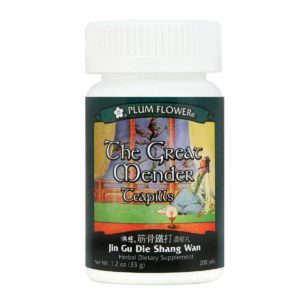 Add to Cart$25.73
$33.70 -
Plum Flower – Kang Gu Zeng Sheng Pian
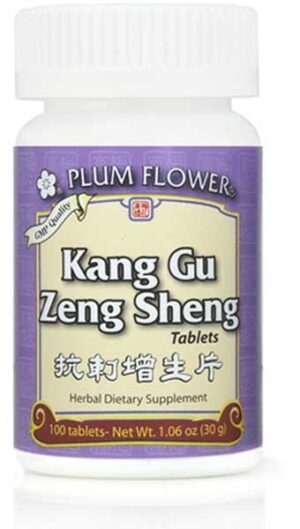 Add to Cart$25.73
$33.70 -
Wu Yang Brand – Pain Patch (Medicated Plaster)
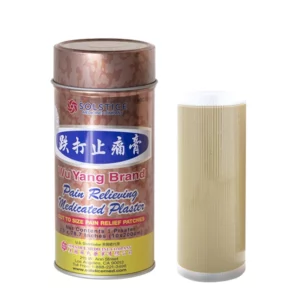 Add to CartStarting at $30.49
 -
Plum Flower – Gecko Tonic (Ge Jie Da Bu Wan)
 Add to Cart$23.13
$30.30 -
Gejie Da Bu Wan – by Yulin Brand
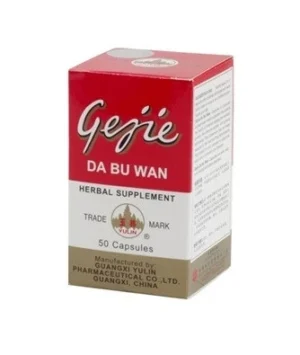 Add to Cart$16.99
 -
Yao Tong Ling – Safflower And Drynaria Combo – (OUT OF STOCK)
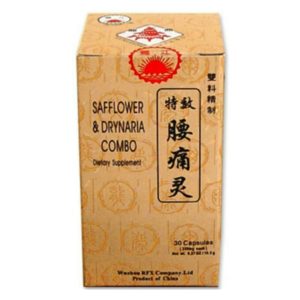 Add to CartStarting at $7.99
 -
Plum Flower – Majestic Yang Teapills (Xiong Wei Da Bu Wan)
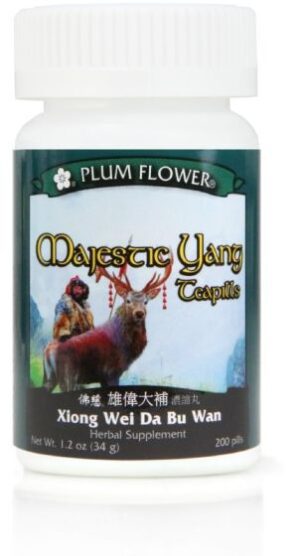 Add to Cart$23.13
$30.30